

By TechNews Editor | Published in Innovation & Hardware
For decades, the semiconductor landscape has been dominated by two proprietary Instruction Set Architectures (ISAs): x86, licensed by Intel and AMD, and ARM, licensed to mobile and embedded chip designers. While these architectures enabled the modern computing revolution, their high licensing fees and rigid design constraints have created friction for startups and hardware innovators.
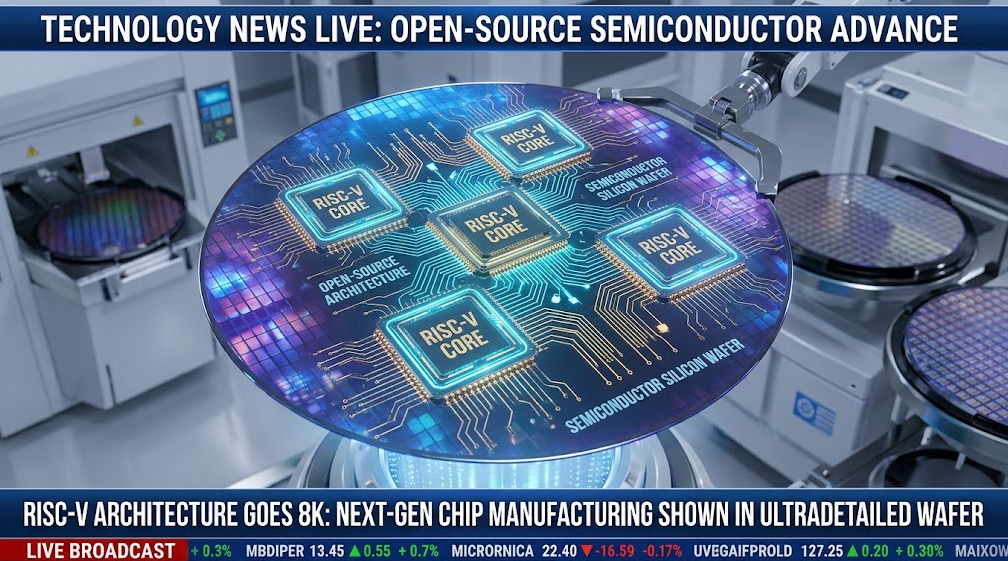
Enter RISC-V—an open-source, royalty-free Instruction Set Architecture that is fundamentally democratizing chip design across microcontrollers, data center accelerators, and space hardware.
What Makes RISC-V Revolutionary?
Unlike proprietary ISAs, RISC-V (pronounced “risk-five”) is not a physical processor; it is an open standard specification created at UC Berkeley. Anyone can download the instruction set and design custom microprocessors without paying licensing fees or royalties.
According to documentation published by RISC-V International, the architecture offers key technological advantages:
- Modular Architecture: RISC-V features a small, highly optimized base instruction set with optional modular extensions for vector processing, floating-point math, and cryptography.
- Custom Extensibility: Hardware engineers can add custom domain-specific instructions directly onto the silicon die to accelerate specific workloads like machine learning or video encoding.
- Geopolitical Sovereignty: Because the ISA standard is open-source, tech companies and sovereign nations can develop independent silicon manufacturing ecosystems without risk of export blockades.
Further technical breakdowns can be explored via Wikipedia’s RISC-V overview.
Expanding Beyond Embedded Microcontrollers
When RISC-V first emerged, skepticism remained regarding its ability to scale beyond low-power IoT devices and microcontrollers. However, rapid industry adoption has shattered those expectations.
As highlighted in technical analyses on EE Times, major cloud providers and chipmakers are actively building RISC-V cores to serve as management processors alongside primary enterprise GPUs and CPUs.
Furthermore, automotive leaders are deploying RISC-V microcontrollers into safety-critical braking and steering systems due to the auditability and transparency of open-source silicon code.
Powering the Next Generation of AI Accelerators
As explored in our ongoing hardware breakdowns in Tech today, custom AI silicon requires high memory throughput and specialized tensor math units. RISC-V allows chip designers to strip away legacy PC overhead and build hyper-focused matrix processing engines at a fraction of traditional development costs.
The Road Ahead: A Truly Open Hardware Ecosystem
The momentum behind RISC-V mirrors the rise of Linux in the operating system market decades ago. As software toolchains, compilers, and operating system kernels mature around open hardware, RISC-V is establishing itself as a permanent third pillar in global computing architecture.
By breaking down monetary and intellectual property barriers, open-source silicon is paving the way for unprecedented innovation in hardware design.