




By TechNews Editor | Published in Innovation & Hardware
As global businesses accelerate their migration to multi-cloud architectures, the surface area for cyberattacks has expanded exponentially. Traditional security operations centers (SOCs) are struggling to keep up with the overwhelming volume of daily alerts, complex cloud misconfigurations, and increasingly sophisticated threat vectors.
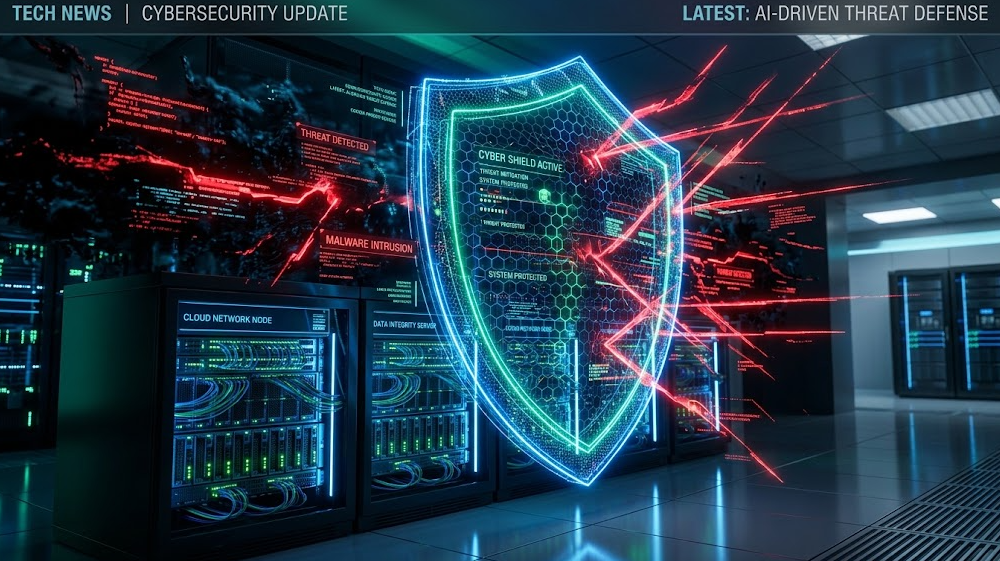
In response, enterprise security is undergoing a fundamental transformation. Security teams are migrating from reactive defense mechanisms toward AI-driven Threat Detection and Automated Incident Response, leveraging machine learning models to neutralize threats in real time.
The Escalation of Automated Cyber Attacks
Modern threat actors are no longer relying solely on manual breach techniques. Attackers are using generative AI tools to craft hyper-personalized phishing campaigns, locate zero-day vulnerabilities in cloud software, and deploy adaptive malware that alters its own code to evade signature-based antivirus scanners.
According to alerts issued by the Cybersecurity and Infrastructure Security Agency (CISA), critical infrastructure and enterprise cloud environments are increasingly targeted by automated botnets capable of scanning millions of IP addresses per hour for unpatched security flaws.
How AI and Machine Learning Power Modern Defense Systems
To counter high-speed automated attacks, enterprise defense systems rely heavily on Artificial Intelligence in Cybersecurity frameworks to automate detection and remediation:
1. Behavioral Anomaly Detection
Rather than waiting for known malware signatures, security AI models establish a baseline of “normal” user and network behavior. If a user account suddenly accesses sensitive cloud databases at 3 AM from an unrecognized location, the system flag or restricts access instantly.
2. Predictive Threat Intelligence
Threat research highlighted by Microsoft Security Insights demonstrates how machine learning algorithms analyze global telemetry data from billions of daily signals. This allows security infrastructure to predict and patch emerging attack vectors before they can be exploited globally.
3. Automated Incident Response (SOAR)
Security Orchestration, Automation, and Response (SOAR) tools allow AI agents to isolate compromised virtual machines, revoke stolen API keys, and update firewall rules within milliseconds—preventing lateral movement across enterprise networks.
The Double-Edged Sword: AI vs. AI
While AI drastically improves defensive capabilities, security leaders face a complex reality: the same algorithms used to defend systems can also be weaponized by adversaries.
As discussed in our ongoing series on hardware and computing ecosystems in Tech today, securing the future of digital infrastructure will require hardware-level security—such as encrypted memory enclaves (Confidential Computing)—working in sync with cloud-level AI monitoring.
Looking Ahead: The Zero Trust Paradigm
The era of trusting anyone or anything inside a corporate network perimeter is officially over. Moving forward, the foundation of enterprise safety lies in Zero Trust Architecture, continuously verified by real-time AI security models.
For IT administrators, software developers, and cloud architects, integrating AI security directly into the development lifecycle (DevSecOps) is no longer optional—it is the single most critical investment for maintaining digital resilience.