



By TechNews Editor | Published in Innovation & Hardware
For decades, industrial robots have been static, single-purpose machines bolted to factory floors, designed solely to repeat precise movements within controlled environments. However, the convergence of generative artificial intelligence, spatial computing, and next-generation sensor technology is spawning a new era: Embodied AI and Humanoid Robotics.
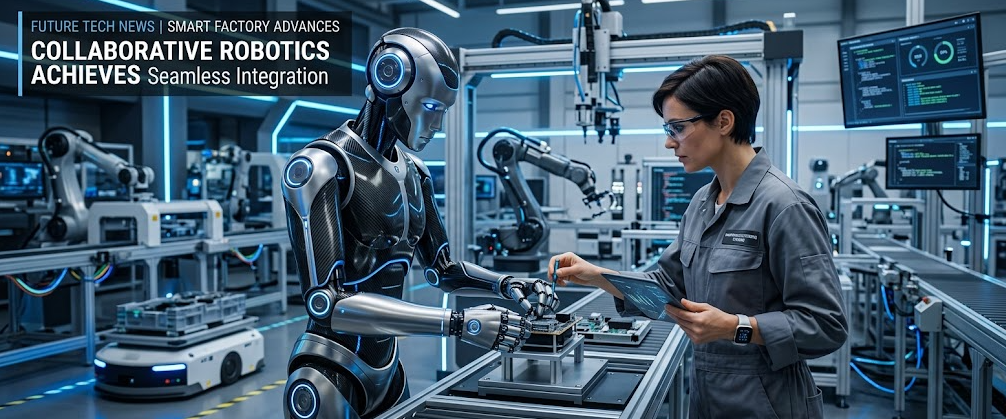
Unlike traditional industrial arms, humanoid robots are engineered to navigate unconstructed human environments, operating the same tools, doorways, and logistics equipment that human workers use.
The Convergence of Generative AI and Physical Hardware
The fundamental breakthrough driving the current robotics wave is the transition from hard-coded algorithms to Vision-Language-Action (VLA) models. As detailed on IEEE Spectrum’s Robotics Overview, modern humanoid robots no longer rely on pre-programmed coordinates for every trajectory.
Instead, multimodal neural networks analyze live video feeds from onboard cameras, translating natural language instructions (e.g., “Sort the damaged microchip packages into the yellow bin”) into physical motor actions in real time.
Key Breakthroughs Accelerating Robot Deployment
Major robotics pioneers and automotive manufacturers are actively testing humanoid units in real-world logistics and manufacturing facilities. Insights from Boston Dynamics News and academic research highlight three core technologies driving this acceleration:
1. High-Torque Actuators and Direct-Drive Electric Motors
Modern humanoids utilize custom electric actuators that combine high power density with delicate force-sensing capabilities. This allows a robot to lift heavy automotive components while maintaining the dexterity required to pick up an egg without cracking it.
2. Real-Time Spatial Perception and LiDAR Integration
Equipped with solid-state LiDAR, depth cameras, and tactile sensors on their fingertips, autonomous humanoids build dynamic 3D maps of their surroundings. This enables them to detect moving obstacles, balance on uneven surfaces, and navigate busy warehouse aisles safely.
3. Synthetic Data Training in Physics Simulators
Training physical hardware directly in the real world is slow and risky. Modern robotics teams leverage photorealistic physics engines to simulate millions of hours of robot movement in virtual environments within hours, accelerating learning before deploying code to physical hardware.
Bridging Software and Physical Realities
As explored in our ongoing coverage of edge computing and NPU hardware in Tech today, processing complex computer vision models locally on the robot requires high-efficiency on-device AI accelerators.
Without low-latency local processing, a robot cannot maintain its balance when bumped or adapt instantly when a tool slips from its grip.
Looking Ahead: The Future of Human-Robot Collaboration
Humanoid robots are not designed to replace the workforce overnight, but rather to address critical labor shortages in high-hazard environments, heavy manufacturing, and warehouse operations.
As manufacturing costs decrease and spatial AI models continue to mature, humanoid robots will transition from experimental lab prototypes to ubiquitous tools, fundamentally reshaping the global industrial landscape.