



Next-Gen AI Microchips: How the New Architecture is Revolutionizing Computing and Efficiency
By TechNews Staff | Published in Innovation & Hardware
The fast-paced evolution of artificial intelligence has pushed modern computing hardware to its absolute limits. As large language models (LLMs) and generative AI applications grow exponentially in complexity, traditional graphics processing units (GPUs) are encountering severe performance and energy consumption bottlenecks.
In response to these industry-wide challenges, a new wave of next-generation AI microchips is entering the market, promising unprecedented processing power, reduced latency, and significantly lower energy demands.
The Core Challenge: Energy Consumption and Bandwidth Limits
For years, high-performance GPUs have been the undisputed backbone of artificial intelligence workloads. However, as AI training clusters scale up to tens of thousands of chips, data centers face two massive hurdles:
- The Power Wall: Training cutting-edge AI models consumes millions of kilowatt-hours of electricity, making sustainability and operational costs a top priority for tech giants.
- The Memory Wall: Transferring massive amounts of data between memory (DRAM) and processing cores creates physical bottlenecks, limiting real-time processing speeds.
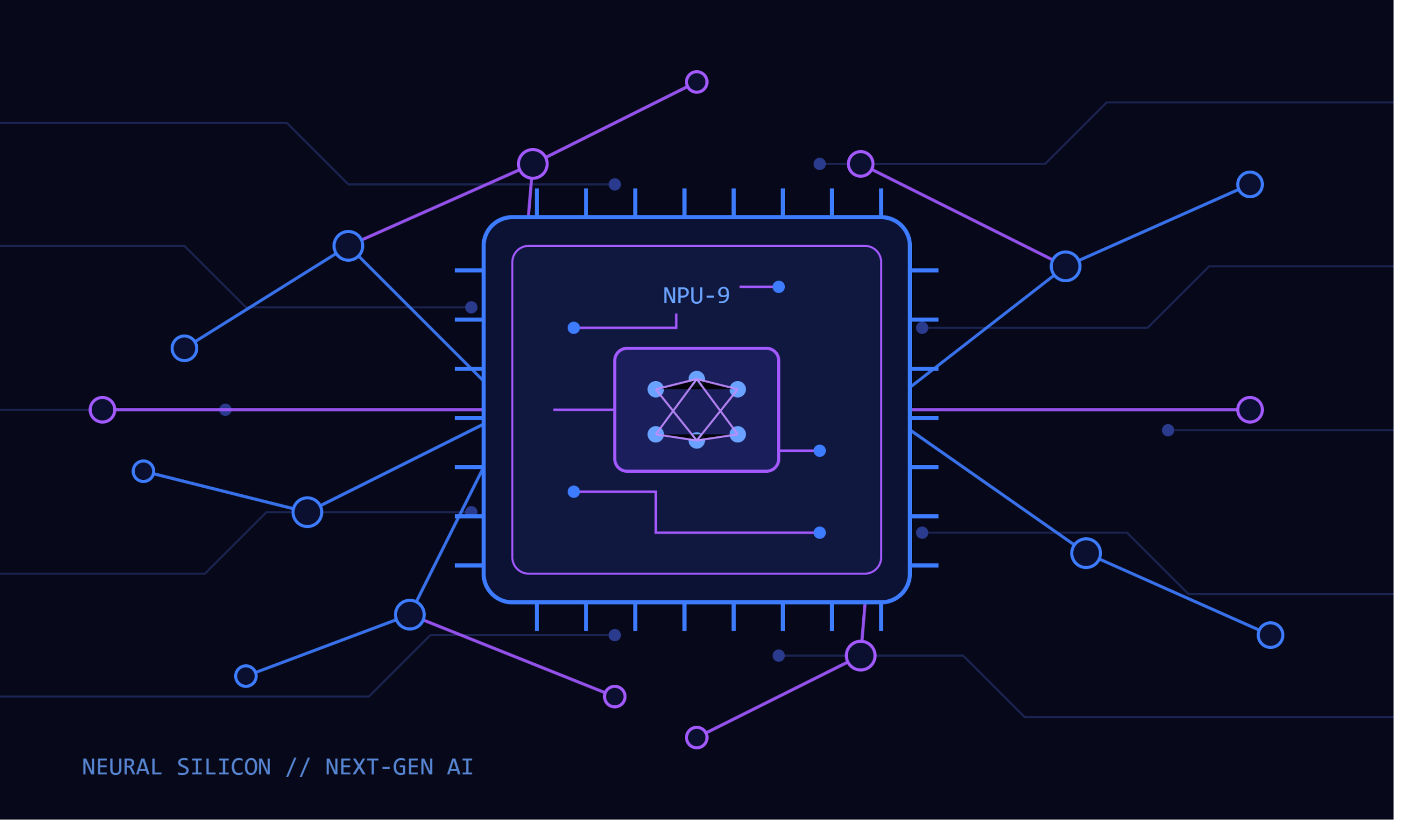
To address these limitations, semiconductor engineers are shifting away from traditional general-purpose GPU designs to dedicated Neural Processing Units (NPUs) and specialized Application-Specific Integrated Circuits (ASICs).
Key Breakthroughs in Next-Gen AI Chip Architecture
The latest generation of AI hardware introduces several architectural innovations that rethink how computers process information:
1. High-Bandwidth Memory (HBM3e) Integration
By stacking memory layers vertically and connecting them directly to the processor using ultra-fast interconnects, new chips eliminate the latency associated with traditional external memory chips. This allows massive AI models to reside directly adjacent to the compute cores.
2. Neuromorphic Computing Techniques
Inspired by the human brain, neuromorphic computing processes data using event-driven architecture. Instead of continuously drawing power to check every clock cycle, these circuits only activate when new data arrives, drastically reducing standby energy consumption.
3. Chiplet Architecture
Rather than manufacturing monolithic silicon dies—which are expensive and yield-prone—manufacturers are combining smaller, modular chips (“chiplets”) onto a single package. This modular approach lowers manufacturing costs while dramatically improving scalability.
Real-World Impact Across Key Tech Sectors
The rollout of these advanced microchips extends far beyond enterprise data centers. The trickle-down effect is already reshaping multiple technology sectors:
- On-Device AI (Edge Computing): Next-gen mobile and laptop processors now feature built-in NPUs capable of running AI models natively on the device, eliminating the need for continuous cloud connectivity while enhancing user privacy.
- Autonomous Vehicles: Real-time computer vision processing requires sub-millisecond reaction times. Dedicated automotive AI processors allow self-driving systems to interpret complex road environments far more safely and reliably.
- Healthcare and Drug Discovery: High-speed AI accelerators allow medical researchers to simulate complex molecular interactions in hours rather than months, accelerating the development of new treatments.
Looking Ahead: The Future of Silicon Innovation
As the demand for artificial intelligence capabilities continues to outpace hardware development, chipmakers are already looking toward optical computing (using photons instead of electrons) and quantum-assisted processing for future breakthroughs.
For tech platforms and developers, adapting to this specialized hardware ecosystem will be vital. The era of simply relying on faster clock speeds is over; the future of computing belongs to architectures designed specifically for the intelligence age.