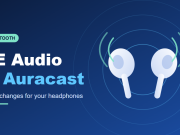



For more than two decades, Bluetooth audio has worked the same basic way: one phone connects to one pair of headphones and streams sound through a codec called SBC. It works, but it is often power-hungry, and it fell behind as people started using earbuds all day. Bluetooth LE Audio, introduced with Bluetooth 5.2, is the biggest rethink of wireless audio since the technology began.
What Is Bluetooth LE Audio?
LE Audio is a new audio architecture built on Bluetooth Low Energy rather than the older Classic radio. This brings three major changes:
⦁ A new codec, LC3. The Low Complexity Communication Codec delivers comparable or better sound than SBC at a noticeably lower bitrate. That means longer battery life, or higher quality at the same power cost.
⦁ Multi-Stream Audio. Each earbud receives its own synchronized stream from the phone, instead of one earbud relaying audio to the other. This can improve connection stability and reduce latency differences between the left and right sides.
⦁ Better hearing-aid support. LE Audio provides a standard way for hearing aids and phones to talk to each other, which previously required proprietary solutions.
Auracast: Audio Broadcasting for Everyone
The most talked-about feature is Auracast, which lets a single transmitter broadcast audio to an unlimited number of nearby receivers, much like a radio station, but with Bluetooth devices.
Practical examples include:
Home use, where two people can listen to the same movie on their own headphones without pairing each pair separately.
Auracast broadcasts can also be password-protected, so private streams stay private.
What You Need to Use It
LE Audio only works when both sides support it. Your phone or laptop needs an LE Audio-capable chipset and operating system support, and your headphones must support LC3 as well. Older devices will keep working through the Classic profile, so nothing breaks, but you will not get the new features.
When shopping for earbuds, look for “LE Audio,” “LC3” or “Auracast” on the spec sheet. A device that merely lists “Bluetooth 5.2” or newer does not necessarily support LE Audio, because the feature is optional.
Limitations Worth Knowing
⦁ Adoption is gradual. Many public venues do not yet offer Auracast broadcasts.
⦁ Some premium codecs, such as aptX Adaptive or LDAC, still compete on quality, especially for lossless-style listening.
⦁ Software support varies between operating systems and manufacturers, so features may arrive at different times on different devices.
The Bottom Line
LE Audio will not make a dramatic difference overnight, but over the next few years it should mean longer-lasting earbuds, better hearing-aid integration, and a shared-listening experience that Bluetooth simply could not offer before. If you are buying new wireless headphones, choosing a model with LC3 and Auracast support is a sensible way to future-proof your purchase.