



By TechNews Editor | Published in Applications & Hardware
Today’s flagships from Apple, Google, and Samsung rely heavily on high-megapixel sensors, multi-frame image stacking, and optical image stabilization (OIS) to produce stunning mobile photography. However, the foundational innovations behind modern mobile camera hardware and computational photography were actually pioneered over a decade ago on the Windows Phone platform by Nokia.
Through the PureView brand, Nokia and Microsoft radically changed consumer expectations for what a smartphone camera could achieve in low-light and long-range imaging scenarios.
The PureView Breakthrough: Oversampling and Massive Sensors
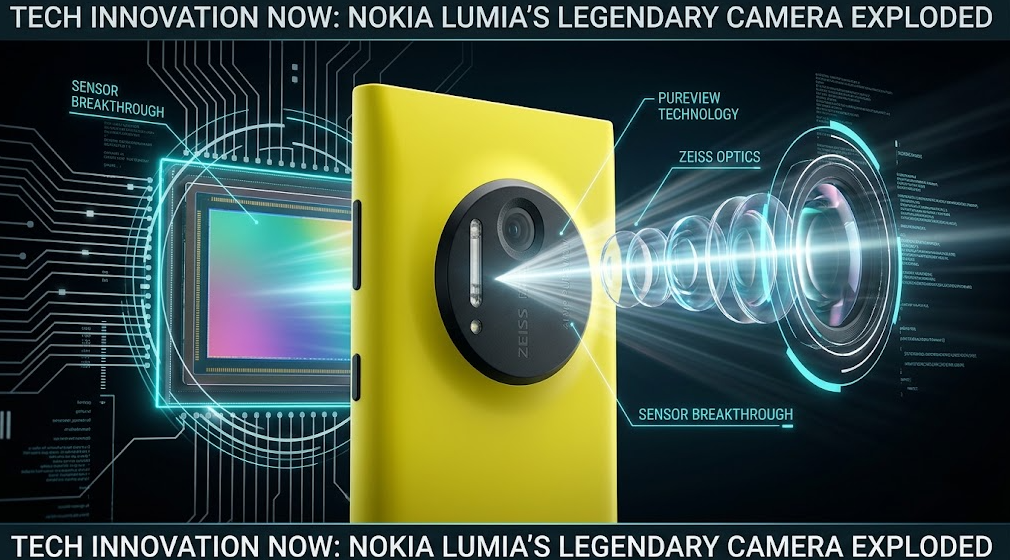
In 2013, the release of the Lumia 1020 running Windows Phone 8 sent shockwaves through the mobile industry. At a time when standard smartphone cameras featured 8 to 12-megapixel sensors, the Lumia 1020 packed a staggering 41-megapixel 1/1.5-inch sensor paired with custom-designed optics from ZEISS.
As detailed on Wikipedia’s PureView technology overview, the core technical breakthrough was Pixel Oversampling:
- Pixel Binning: The Lumia camera processor combined seven individual physical pixels into one high-quality “super pixel,” dramatically reducing visual noise and enhancing color accuracy in low-light environments.
- Lossless Digital Zoom: By cropping directly into the massive 41-megapixel sensor array, users could zoom in up to 3x without the spatial resolution degradation typical of digital zoom.
- Mechanical Optical Image Stabilization (OIS): Nokia engineered a custom ball-bearing suspension system for the heavy lens assembly, enabling extended shutter speeds without motion blur.
Pro Camera UI: The Blueprint for Manual Mobile Control
Prior to Windows Phone, mobile camera applications offered minimal user control beyond basic flash toggles and scenes. Windows Phone introduced the Nokia Pro Camera UI, featuring an intuitive radial control wheel interface.
According to retrospective testing from camera authority DPReview, this interface allowed photographers to adjust ISO, shutter speed, exposure compensation, focus distance, and white balance in real time—a control scheme that remains the industry standard for professional camera apps on modern operating systems today.
Software Constraints and the Processing Bottleneck
While the camera hardware was years ahead of its time, it hit severe performance bottlenecks due to early mobile silicon constraints.
Processing a 41-megapixel RAW image required several seconds per shot on dual-core Qualcomm Snapdragon processors. This computational delay meant the camera app could not capture instant bursts or process complex real-time HDR stacks at the speeds modern AI-driven NPUs handle today.
The Persistent Legacy in Modern Smartphones
As explored in our ongoing hardware analyses in Tech today, the engineering principles introduced during the Windows Phone era remain central to modern smartphone hardware.
Every 108-megapixel sensor, quad-binned image, and periscope zoom lens on current market flagships builds directly upon the hardware and optical breakthroughs introduced by Windows Phone’s Nokia Lumia series.